

The Land Edit
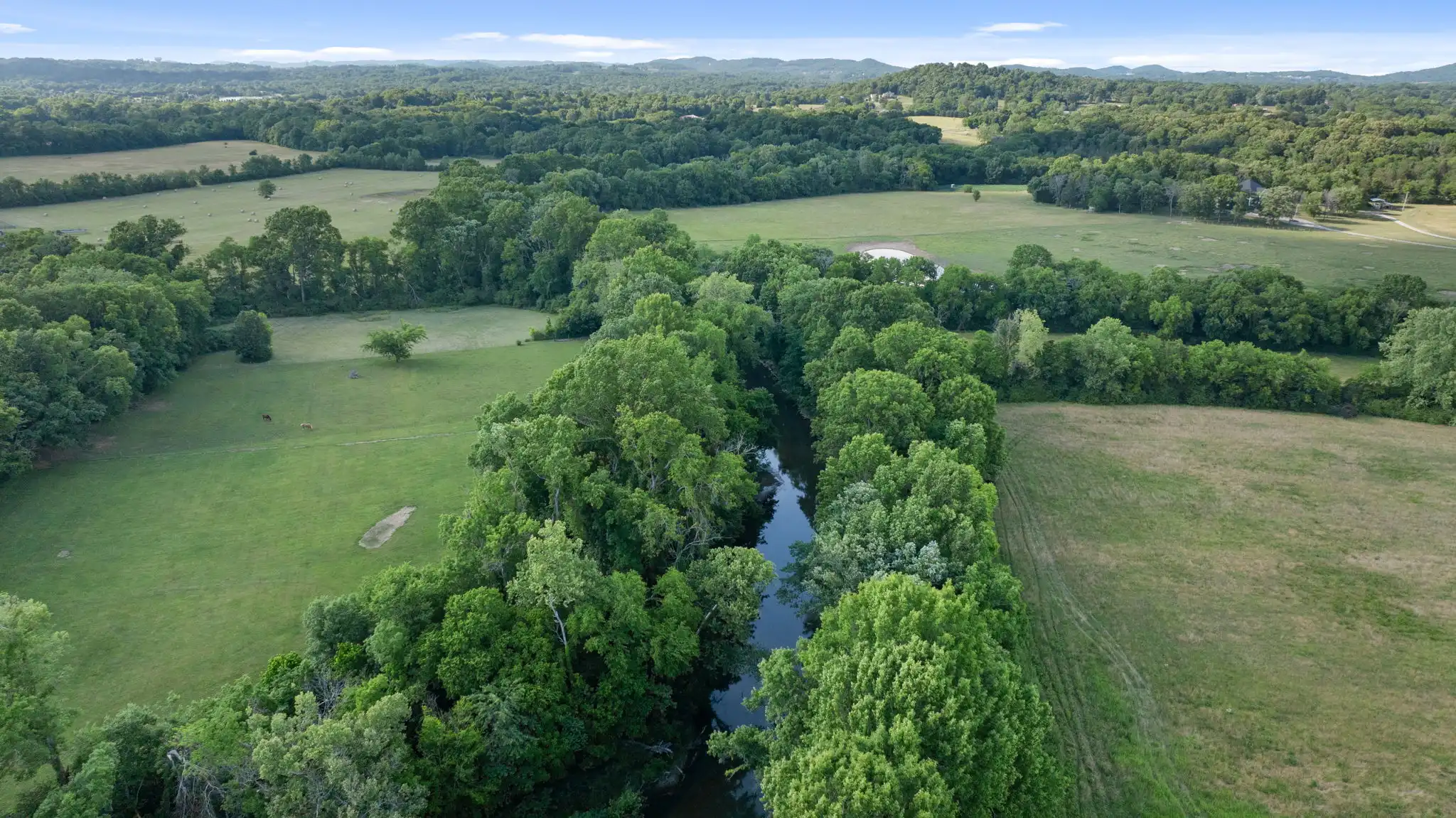
Ten acres outside Franklin. A long driveway disappearing behind the trees. A creek winding through the back of the property. Enough room for a barn, a few horses, chickens, a garden, maybe even a guest house someday.
For many buyers moving to Middle Tennessee, this is the dream. And it can be a wonderful one.
But when buying acreage in Franklin and Williamson County, one of the most important things to understand is that the number of acres tells you surprisingly little about what you can actually do with the property.
Ten acres does not necessarily mean ten usable acres. A beautiful field does not automatically mean a future homesite. A creek can be an incredible lifestyle feature while also affecting where development can occur.
And owning enough land for a barn, horses, goats, chickens or cattle doesn’t by itself answer whether your specific property and plans comply with applicable zoning, septic, building, environmental and private restrictions.
Before falling in love with the view, here are the questions we think acreage buyers should be asking.
First, Is the Property Actually in Franklin?
This sounds obvious. It isn’t. A property can have a Franklin mailing address without necessarily being located inside the City of Franklin.
That distinction matters because properties within Franklin city limits are governed by the City of Franklin Zoning Ordinance, while development in unincorporated Williamson County is governed by Williamson County’s zoning regulations.
That can affect everything from permitted uses and setbacks to accessory structures and the development review process.
The City of Franklin adopted a new zoning ordinance effective January 13, 2026, and its regulations vary by zoning district. Williamson County maintains a separate zoning ordinance for development within unincorporated areas.
So one of our first questions when evaluating land is not simply:
What’s the address?
It’s:
Who has jurisdiction over it, and how is it zoned?
That answer becomes the starting point for nearly everything that follows.
Ten Acres Does Not Always Mean Ten Usable Acres
This is one of the biggest misconceptions we see with acreage. Imagine two properties. Both are ten acres. One is mostly level, has good access, an appropriate homesite, suitable soils, public water nearby and plenty of functional open ground.
The other has steep terrain, a creek, floodplain, utility easements and limited suitable soils for septic. On paper, they’re the same size. In practice, they may offer two completely different lifestyles.
Franklin’s current zoning ordinance even defines “developable” land as the portion of a property available for development after accounting for resource and open-space areas such as floodplain, riparian buffers, Hillside/Hillcrest Overlay areas, tree-save areas and other protected spaces.
The ordinance also places additional requirements on naturally occurring slopes of 14% or greater, and land within Franklin’s Hillside/Hillcrest Overlay can be required to remain non-buildable or within a conservation easement. That’s why acreage should never be evaluated by acreage alone.
Usability matters more than the number on the listing.
The Perc Site May Be More Important Than the View
For properties that aren’t served by public sewer, septic should move very high on the due-diligence list.
In Tennessee, a property owner who wants to install a subsurface sewage disposal system must obtain a septic-system construction permit. The review isn’t simply about whether a septic tank fits somewhere on the property.
Information submitted during the permitting process can include the proposed house location, number of bedrooms, lot size, well and spring locations, driveway, utilities and soils information.
And that creates an important practical point for buyers:
The septic area can influence the house you ultimately build and where other improvements can go.
If you’re imagining a five-bedroom home, pool, detached garage and barn, don’t assume that because all of those things physically fit on the acreage, they’ll all work within the property’s approved layout.
The designated septic area (and the land that must remain protected for the system) needs to be understood before finalizing the rest of the vision.
Think About the Future Property, Not Just the Future House
When buyers walk raw land, most naturally begin by deciding where the house should go. We encourage them to zoom out.
What does the whole property eventually look like?
Do you want:
- Horses?
- Chickens?
- Goats or sheep?
- Cattle?
- A barn?
- A riding arena?
- A chicken coop?
- A workshop?
- A pool?
- A large garden?
- A guest house or separate living quarters?
- Additional fencing and pasture?
- Another homesite someday?
Those aren’t details to figure out five years after closing. They’re clues to whether you’re buying the right property today.

For example, Williamson County’s current ordinance distinguishes accessory-structure requirements partly by lot size. On lots of less than five acres, accessory structures generally must be in the rear yard and meet specified setbacks. Lots of five acres or more have additional placement options, subject to the ordinance’s requirements.
Inside Franklin, the rules are different again. Franklin’s current ordinance regulates accessory structures by zoning district, while its AG Agricultural District specifically provides for farming, agricultural uses, single-family residential on significant acreage and open space.
In other words:
“There’s plenty of room for a barn” isn’t the same as “we’ve confirmed how this barn can be built on this particular property.”
We’ll go much deeper into barns, riding arenas, coops and agricultural improvements later in this series.
If Animals Are Part of the Dream, Start Asking Questions Now
The acreage lifestyle in Williamson County doesn’t always mean a full-scale horse farm. We see people envisioning everything from a few backyard chickens to horses, goats, sheep, cattle and small hobby-farm setups.
And those plans can change what “good land” means. Someone wanting privacy and woods may love a heavily treed property. Someone hoping for horses may care much more about functional pasture, drainage, fencing possibilities, shade, water access and trailer access. Someone dreaming of goats or cattle needs to think about fencing, shelter, water and how the acreage will actually function. Someone wanting chickens may eventually want a coop, feed storage and protected outdoor space.
And beyond government regulations, buyers also need to investigate recorded plats, easements, deed restrictions and any applicable private covenants or HOA restrictions that may impose limitations beyond local zoning.
This is why we recommend beginning with the lifestyle and working backward to the land.
Pay Attention to Where the Water Goes
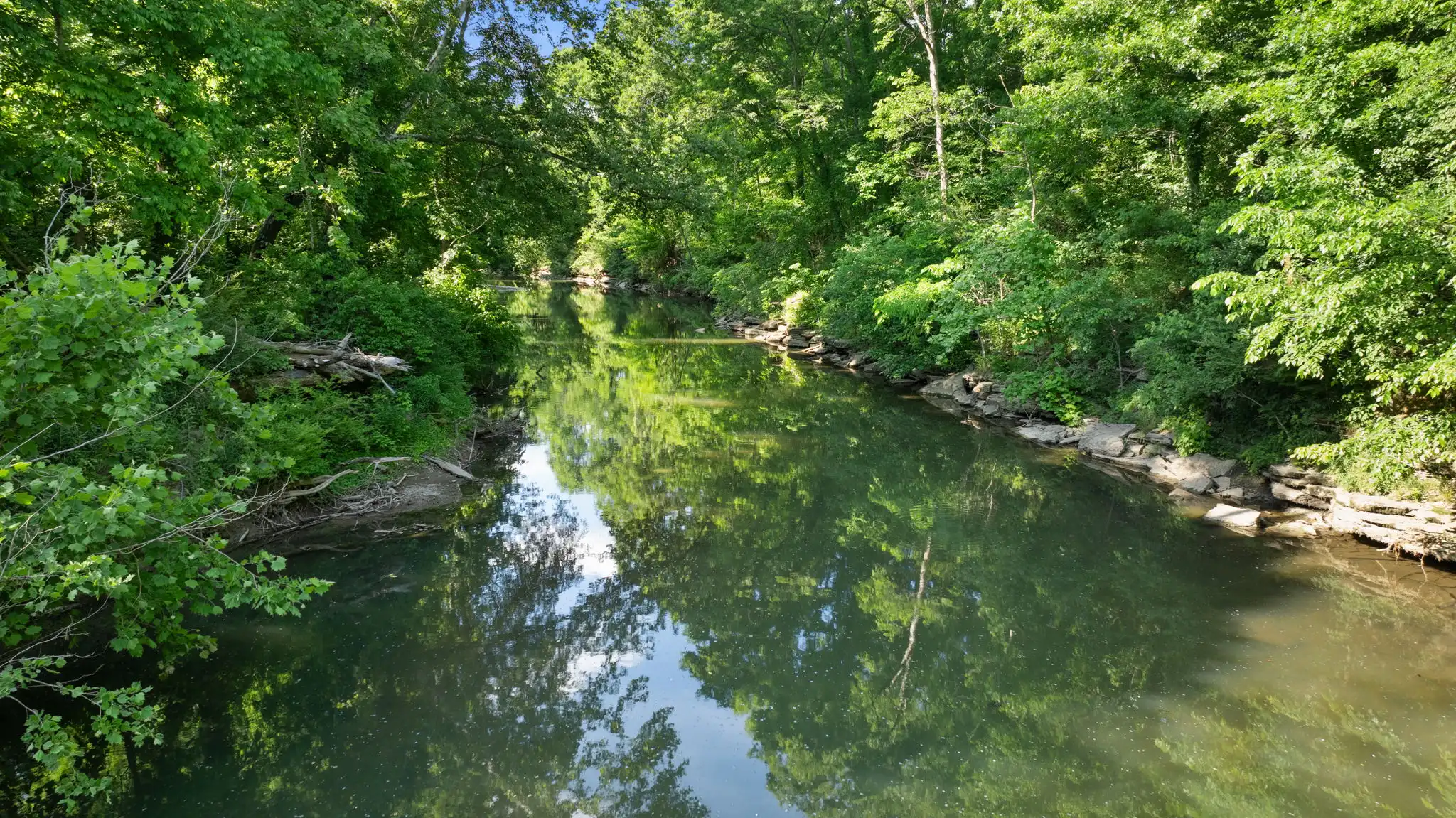
A creek running through a Tennessee property can be one of the reasons someone falls in love with it.
It should also trigger more questions.
- Is it perennial or seasonal?
- Where is the floodplain?
- Is any portion within a floodway?
- Are there riparian restrictions?
- How does the property drain after several days of heavy rain?
- Does the water affect access to another portion of the acreage?
- Could it affect where a future barn, arena, driveway or other improvement is located?
Franklin’s zoning ordinance contains separate regulations addressing riparian setbacks, erosion and sedimentation, stormwater and floodplain protection. Portions of land within certain floodway and floodway-fringe overlays can be designated non-buildable.
That doesn’t mean a creek is a negative. Far from it. For the right property, it may be one of its most extraordinary features.
It simply means water should be evaluated as part of the land.
We’ll dedicate an entire article in this series to creeks, springs, floodplain and the Harpeth River because there’s much more buyers should understand.
The Long Driveway Deserves a Second Look, Too
There’s something undeniably appealing about a house that can’t be seen from the road. But that picturesque long driveway is infrastructure.
In unincorporated Williamson County, driveway location on an existing county road requires County Highway Department approval under the county’s subdivision regulations. Those regulations also address driveway grade, width and access.
This becomes especially important on steep acreage or when the ideal homesite is hundreds of feet from the road.
Buyers should consider not only whether a driveway can reach the homesite, but what constructing and maintaining that access could involve.
The beautiful homesite at the back of the property may still be the right choice. It just shouldn’t be chosen without understanding how everything gets there.
Look at the Easements Before You Look at the View
Another easily overlooked part of acreage ownership is what’s already legally running across the property.
A survey, recorded plat and title work may reveal:
- Utility easements
- Drainage easements
- Access easements
- Shared-driveway arrangements
- Existing rights-of-way
- Designated septic areas
- Other recorded restrictions
Those lines on a survey can have real implications for where improvements are ultimately placed.
Franklin’s current ordinance, for example, prohibits accessory structures from being located within platted or recorded easements or over underground utilities.
So when we’re looking at acreage, we aren’t only looking at what is physically there. We’re also looking at the invisible lines that help determine how the property can function.
Don’t Assume You Can Add Another House Later
This is another place where buyers can get ahead of themselves.
A buyer may look at 15 or 20 acres and think:
“There’s plenty of land. We could always build another house for our parents or divide off a lot for one of the kids.”
Maybe.
But acreage alone does not establish that right.
A future subdivision can depend on zoning, minimum lot standards, access, subdivision regulations, septic suitability and other site-specific requirements.
Likewise, a detached guest house or accessory dwelling has its own regulatory considerations.
If multigenerational living or a future second homesite is an important part of the plan, that possibility should be investigated before purchasing the property, rather than assumed because the parcel appears large enough.
One of Our Favorite Questions: What Does This Property Look Like After It Rains?
A sunny Tennessee afternoon can make almost any piece of land beautiful.
We want to know what happens during the other 364 days, too.
- Where does water collect?
- Which fields stay wet?
- Does the creek rise?
- Does water cross the driveway?
- Does a low area become muddy?
- How does the slope drain toward the house or proposed homesite?
- Where would horses or livestock be during a prolonged wet period?
- Where would a future barn sit?
Some of the most useful information about acreage isn’t discovered by standing at the prettiest point on the property.
It’s discovered by understanding how the land behaves.
The Most Important Question Isn’t “How Many Acres?”
It’s:
What do you want those acres to do?
If the dream is a private estate surrounded by woods, you’ll evaluate land one way.
If it’s horses and a riding arena, you’ll evaluate it differently.
If it’s chickens, goats, gardens and a small hobby farm, there are different considerations again.
If it’s a multigenerational property with a future second residence, the questions change once more.
That’s why buying acreage in Franklin and Williamson County requires a different level of due diligence than buying a home in a conventional neighborhood.
You’re not simply evaluating the house that’s there today.
You’re evaluating the possibilities and limitations of the land around it.
Before Buying Acreage in Williamson County, We Would Want Answers to These Questions
Before closing, the exact list will vary by property, but we’d want to understand:
• Is the property inside a municipality or in unincorporated Williamson County?
• What is the current zoning?
• What do the recorded plat, survey and title documents show?
• Is the property served by sewer, or will it rely on septic?
• If septic is required, what has actually been approved?
• Are there floodplain, floodway, creek, steep-slope or other environmental constraints?
• What portion of the acreage is realistically usable for the buyer’s intended lifestyle?
• How is the property accessed?
• What easements affect it?
• Are there private restrictions in addition to government regulations?
• If animals are planned, does the property work for the animals and supporting structures envisioned?
• If future improvements are planned, have the relevant authorities confirmed what’s possible?
Most importantly:
Are we buying land based on what we hope it can become—or based on what we’ve actually verified?
Final Thought
The appeal of owning land in Williamson County is easy to understand. It’s coffee overlooking the pasture. Horses outside the kitchen window. Fresh eggs from the coop. Kids splashing in the creek. A garden that gets a little bigger every year. A barn that becomes as much a gathering place as it is a working one. And a little more distance between home and the rest of the world.
The goal of due diligence isn’t to take the romance out of that picture. It’s to protect it. Because the right piece of land isn’t necessarily the property with the most acreage or even the prettiest view.
It’s the property where the land, the regulations and the life you’re imagining can actually work together.
If you’re considering buying acreage in Franklin, Leiper’s Fork, College Grove, Arrington, Thompson’s Station, or elsewhere in Williamson County, we’d love to help you look beyond the acreage number and understand the property as a whole.
At The Jernigan Group, we help buyers evaluate not only the home that’s there today, but the land, lifestyle and long-term possibilities surrounding it.
📞 615.594.1990
📧 info@thejernigangroup.com
*Please Note: Land-use, zoning, septic, floodplain and building requirements are property-specific and can change. Buyers should verify intended uses and improvements with the City of Franklin, Williamson County and other applicable authorities and professionals before purchasing or developing property.