

Developments in Franklin Series
There’s a new name Franklin residents are going to start hearing a lot more often: Harlin.
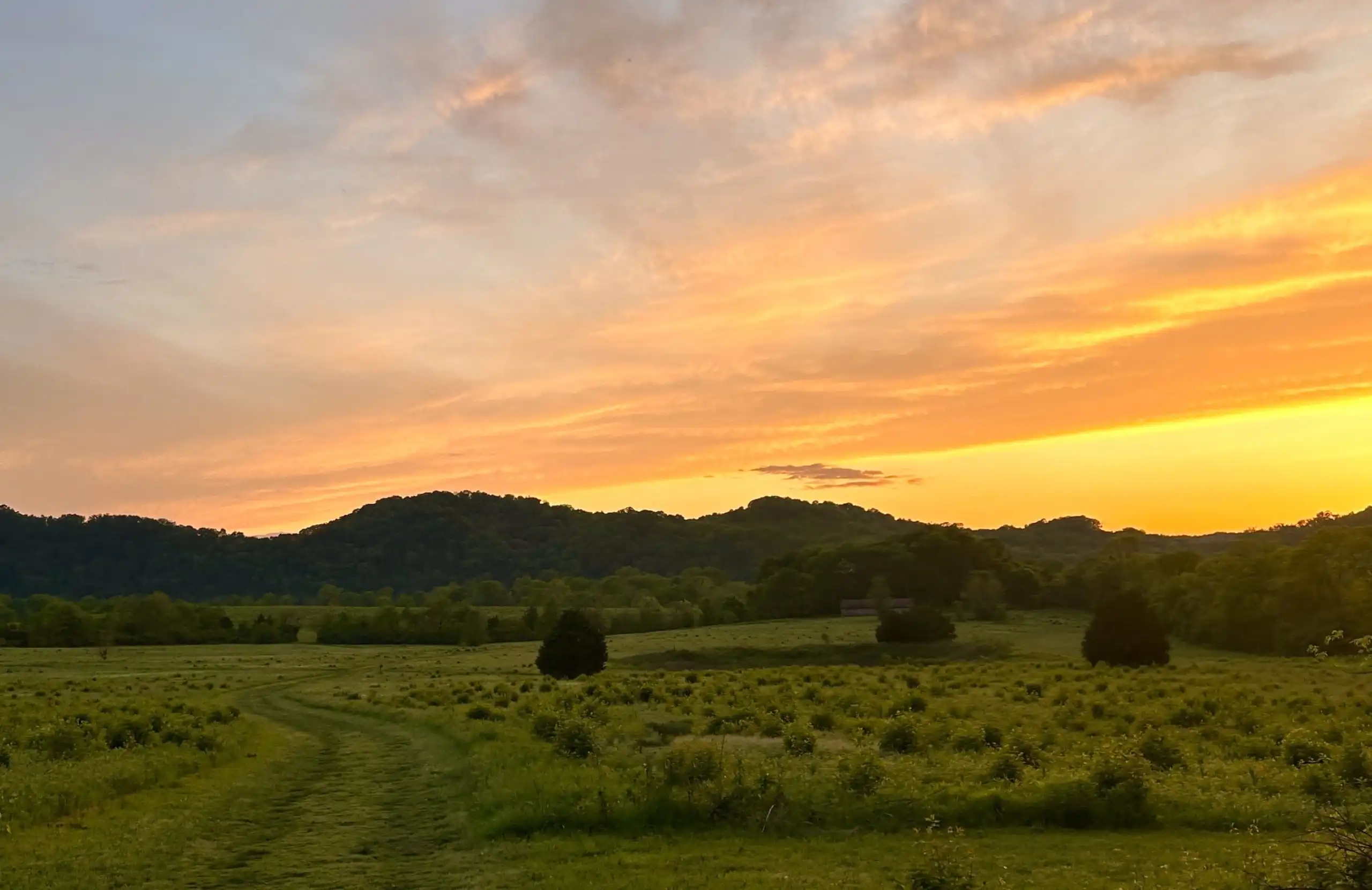
Planned for the rolling farmland just south of Downtown Franklin, Harlin is envisioned as an entirely new kind of community—part neighborhood, part village, and part countryside retreat.
The plans include estate homes, brownstones, condominium residences, gathering spaces, specialty shops, small offices, a boutique inn, trails, and expansive preserved open space.
But to understand why this development is particularly interesting, you have to understand the land behind it.
Because Harlin isn’t just borrowing a historic Franklin name.
It’s being built on land the Harlin family has called home for nearly 70 years.
First: This Isn’t Harlinsdale Farm
Locals will immediately recognize the Harlin name because of The Park at Harlinsdale Farm, the historic Tennessee Walking Horse farm located along Franklin Road near The Factory.
But Harlin is a different property with a connected family history. The development is planned for the Harlin family’s former dairy farm in south Franklin, tucked beneath Winstead Hill near Columbia Avenue, Coleman Road, Hillview Lane, and Mack Hatcher Parkway.
The approximately 311-acre farm has been in the Harlin family for nearly seven decades. Tom Harlin—who was also a partner with his brother Bill in Harlinsdale Farm—purchased this property in the 1960s with plans to establish a dairy. What began with approximately 30 Holstein cows eventually grew to more than 400. The operation became so large that the family leased and farmed hundreds of additional acres around Franklin to grow the alfalfa hay and corn silage necessary to sustain it.
Some of those fields are almost impossible to imagine as farmland today.
The Harlin operation once farmed property where Polk Place and Dallas Downs now stand, along with land where Target, Kroger, Chick-fil-A, and other businesses operate today.
It’s an interesting reminder of just how dramatically south Franklin has changed within a relatively short period of time.
The dairy ultimately ceased operations roughly two decades ago.
Now, the land is preparing for another chapter.
What Is Being Planned at Harlin?
The Harlin family selected Boyle Investment Company to develop the property.
That’s a notable choice locally.
Boyle is behind several recognizable Williamson County developments, including Berry Farms, McEwen Northside, and Meridian Cool Springs.
But Harlin isn’t intended to simply replicate any of them.
The vision is much more pastoral.
Plans describe a walkable village surrounded by countryside, with architecture inspired by turn-of-the-century Franklin and an emphasis on natural materials, open land, gathering places, and hospitality.
Rather than building one uniform housing type across hundreds of acres, Harlin is planned around what the development team describes as a mix of “town and country.”
What Will the Homes Look Like?
Closer to the village center, plans call for a more walkable collection of residences.
That could include:
• Single-family homes inspired by historic Downtown Franklin
• Stately brownstones
• Condominium flats with elevator access
• Other attached residential options
Move farther away from the village center, however, and the character changes.
The surrounding countryside is planned to include significantly larger two- to eight-acre homesites, creating a transition between the denser village and the neighboring farms and estates.
That combination is one of the more interesting aspects of Harlin.
Someone could potentially choose a lock-and-leave residence near shops and gathering spaces while another homeowner within the same broader community could live on several acres.
The Village Center Could Become the Heart of Harlin
The commercial component isn’t envisioned as another large shopping center.
Instead, plans describe smaller-scale businesses and gathering places intended primarily to serve the community and create the feeling of a traditional village center.
The vision has included ideas such as:
• A boutique inn
• A general store
• A wine bar
• A tea room
• Specialty shops
• Small offices
• Artist and creative spaces
• Live-work courtyards
• Intimate community events
Specific tenants have not yet been announced, so these should be viewed as part of the vision rather than a finalized business roster.
But the concept itself tells us quite a bit about what Harlin is trying to become.
This isn’t being designed around a big-box commercial district.
It’s being designed around places residents might naturally walk to and gather.
One of the Biggest Details: 70% Open Space
Here’s the part of the Harlin plan that may surprise people most.
Under Franklin’s new Village Green land-use policy, approximately 70% of the land is required to remain useful open space.
Village Green was introduced through the 2024 update to Envision Franklin as a way to accommodate growth while preserving more of the natural landscape.
Instead of designing the roads and buildings first and leaving whatever land remains as open space, the concept essentially reverses the process.
Important natural features—hillsides, waterways, trees, views, and other landscape elements—are identified first.
Development is then clustered around them.
At Harlin, that means Polk Creek, rolling fields, wooded hillsides, long western views, and other pieces of the property’s natural character are intended to become defining features of the community rather than remnants left between buildings.
A network of multi-use trails is also expected to connect homes, open spaces, parks, and the village center.
Harlin Will Have More Than Estate Homes
Another interesting piece of the plan is housing diversity.
Harlin is being positioned as a luxury community, and the large acreage homesites will certainly contribute to that.
But the plans also call for a broader range of housing types and price points.
Franklin has spent years discussing the area’s so-called “missing middle”—housing options between conventional apartment living and increasingly expensive detached single-family homes.
Harlin’s mix of condominiums, attached residences, single-family homes, and estates is intended to address some of that gap.
The development team has also stated that Harlin will include residences qualifying as workforce housing under Franklin’s current housing policies.
That makes the project more complex than simply another luxury subdivision coming to Williamson County.
The Boutique Inn Is Another Detail to Watch
Among the most intriguing pieces of the plan is a proposed boutique inn.
Details are still limited, but its inclusion reinforces the broader hospitality-driven vision for Harlin.
Instead of creating a neighborhood that visitors rarely enter unless they’re visiting someone’s home, Harlin is being designed to have places where residents, visitors, and overnight guests can gather.
It’s a concept that feels closer to a small Southern village than a conventional suburban development.
And as Franklin continues attracting visitors from across the country, the hospitality component could make Harlin a destination beyond the people who ultimately live there.
What About Traffic?
This is understandably one of the biggest questions surrounding a project of this scale.
The development’s primary entrance is planned along Coleman Road, rather than Hillview Lane.
According to current plans, Hillview Lane access would be limited to Harlin residents and future hotel guests, while visitor and delivery traffic would generally be directed toward Coleman Road.
Boyle has also committed to improvements at the Henpeck Lane/Coleman Road intersection and significant improvements around Mack Hatcher and Columbia Avenue.
Timing matters here, too.
The development is planned in phases, with construction intended to align with larger infrastructure improvements, including the planned expansion of Mack Hatcher Southeast.
Boyle is currently targeting a 2027 start for construction.
Why Harlin Is One of the Most Interesting Developments to Watch
Franklin has spent years wrestling with the same question:
How do you accommodate growth without losing what made people want to live here in the first place?
Harlin may become one of the most significant tests of the city’s answer.
It’s a major development.
But instead of maximizing the number of homes across the property, the Village Green approach calls for most of the land to remain open.
Instead of separating residential neighborhoods from commercial centers, it introduces small-scale shops and gathering places within walking distance.
And instead of offering one housing type, it proposes everything from condominium living to multi-acre estates.
Whether the finished community ultimately delivers on that vision is something we’ll be watching closely.
But on paper, Harlin represents a noticeably different approach to Franklin’s next phase of growth.
The Bigger Story Is South Franklin
Harlin also gives us another clue about where Franklin’s growth is heading.
For years, much of the attention has centered on Downtown Franklin, Cool Springs, Berry Farms, and the areas surrounding I-65.
South Franklin is increasingly becoming part of the conversation.
Harlin sits only minutes from Downtown Franklin, but its setting still includes rolling farmland, mature trees, creeks, and long countryside views.
As infrastructure improves and development continues moving south, properties like this will play a major role in determining what that part of Franklin looks and feels like decades from now.
That’s why Harlin is worth paying attention to even if you never plan to live there.
What We’re Watching Next
There is still plenty we don’t know.
As Harlin moves closer to construction, we’ll be watching for:
• Final homebuilders and architectural plans
• Pricing and release dates for residences
• Details surrounding the two- to eight-acre homesites
• The first announced shops and restaurants
• More information about the boutique inn
• Trail and public-space plans
• Infrastructure and road improvement timelines
• The timing and phasing of the overall community
Those details will give us a much clearer picture of how the vision translates from a master plan into an actual Franklin neighborhood.
Final Thought
The most interesting thing about Harlin may be the land itself.
The Harlin family watched Franklin grow around this farm for nearly 70 years.
Fields they once leased to feed hundreds of dairy cows became neighborhoods, shopping centers, restaurants, and roads.
Now their own farm is preparing to change.
But rather than erase the property’s rural character entirely, Harlin is being planned around preserving much of it.
That’s what makes this development one we’ll be watching closely.
Because as Franklin continues to grow, the question is no longer whether change is coming.
It’s what kind of places Franklin chooses to create as it does.
And Harlin could become one of the clearest examples yet of what that next chapter looks like.
If you’re considering a move to Franklin, Brentwood, College Grove, or anywhere throughout Williamson County, we’d love to help you understand not only today’s real estate market, but the developments and investments that could shape these communities for years to come.
At The Jernigan Group, we believe understanding where an area is headed is just as important as understanding where it is today.
📞 615.594.1990